

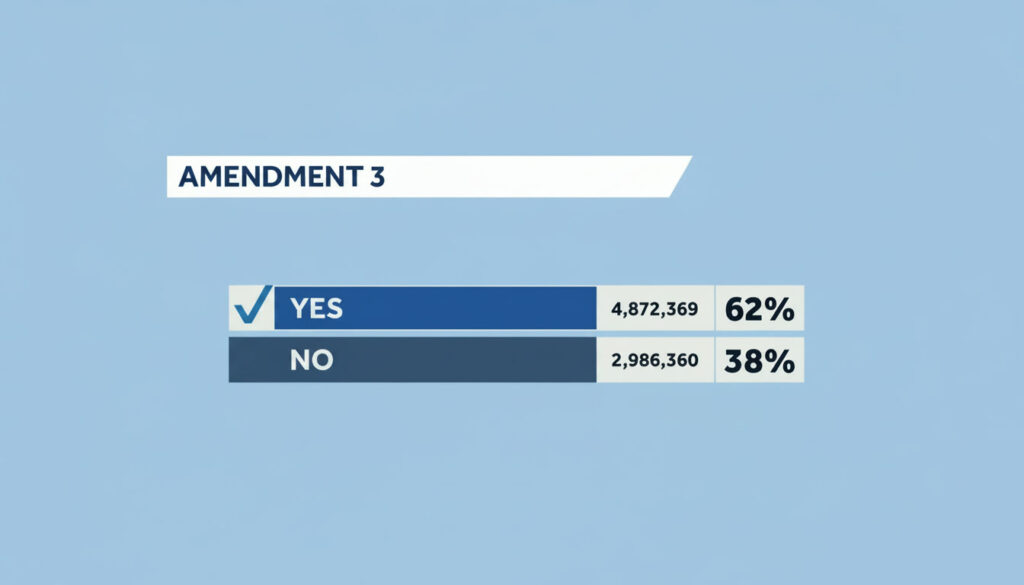
I’ve been reading the reactions to Florida’s Amendment 3, and apparently we’re either about to experience another real estate boom or make Miami even more expensive than it already is. Some people are celebrating the property-tax savings, while others are wondering how cities and counties will make up the lost revenue. And then there are renters, who probably have a pretty reasonable question. What exactly did I win?
I’ve owned property in South Florida, and I can tell you that the purchase price is only part of the conversation. Between insurance, property taxes, maintenance, and everything else that comes with owning a home, it’s amazing how quickly an affordable mortgage payment can become something entirely different. So when I hear that Florida voters just approved a measure designed to reduce property taxes, my first reaction is that this sounds like a good thing.
But I also know that when somebody saves money, it doesn’t necessarily mean the money disappears from the equation. Sometimes the cost moves somewhere else, and that’s what got me interested in looking beyond the celebrations and complaints.
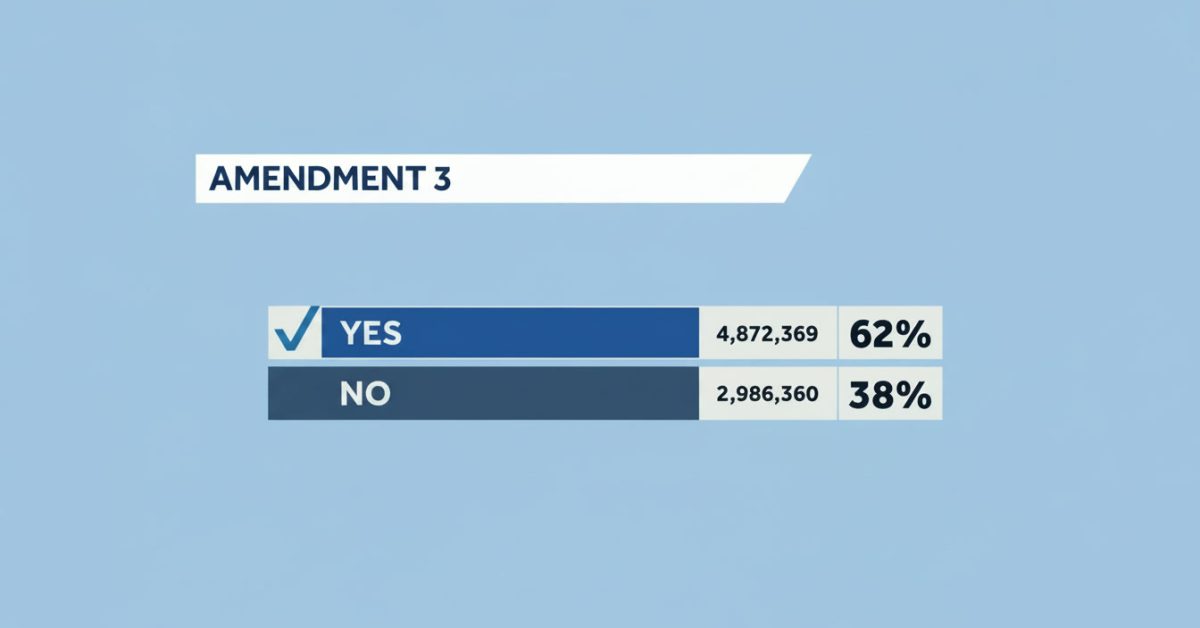
Florida voters approved Amendment 3 on November 3, changing property-tax rules for qualifying homeowners and certain other properties beginning in 2027. The amount someone saves depends on the property’s assessed value, the exemptions they qualify for, and which taxes are affected.
How Much Will Florida Homeowners Save Under Amendment 3?
I came across a CBS Miami report about a Brickell condominium owner named Vanessa Mesa. Before the election, she wanted to know how much Amendment 3 might reduce her property taxes, so the station arranged for a professional to estimate her savings.
The number came back at $1,351.78 for the first year.
Vanessa was pleased. She talked about putting the money toward home improvements, and I can understand why. That’s more than $1,300 she might otherwise have sent to the government, assuming the estimate holds. It won’t change her life, but it could certainly pay for something around the house.
Then CBS interviewed Walter Rasor, a retiree living in Sunrise. He went through the same exercise, except his estimated savings came to $108 for the year. Walter was considerably less enthusiastic, particularly when he considered what his city might have to give up in exchange for the lost tax revenue.
I found that interesting because neither homeowner was necessarily looking at the amendment incorrectly. They were simply looking at their own numbers.
According to the official amendment language published by the Florida Department of State, the measure increases the homestead exemption for non-school property taxes to $150,000 in 2027, followed by $250,000 in 2028. It also reduces the annual assessment-growth cap on non-homestead properties from 10% to 5%, which matters for investment properties, second homes, and commercial real estate.
There are some important limitations. The expanded exemption doesn’t cover school property taxes, and under the new residency and homestead eligibility rules, people who weren’t Florida residents by December 31, 2026, generally have to wait until their fifth year of homestead eligibility to receive the larger benefit.
So two people can own homes worth roughly the same amount and still receive very different savings. Their assessed values, exemptions, tax rates, and eligibility all matter.
Vanessa and Walter’s experiences remind us that the headline isn’t the calculation.
Miami-Dade homeowners can also use the Property Appraiser’s tax estimator to explore their potential property-tax costs.
What Amendment 3 Means for Miami Homebuyers
Since Vanessa owns a condominium in Brickell, I got curious about what the numbers look like for someone buying in that neighborhood today.
I found a two-bedroom condominium at 500 Brickell Avenue, Unit 2510. It originally hit the market in March 2025 with an asking price of $789,000. After several price reductions, it eventually sold in June 2026 for $550,000.
That’s a $239,000 difference between the original asking price and what someone ultimately paid.
The property has another interesting detail.
According to its published listing history, the 2025 property-tax bill was approximately $9,659, while the monthly condominium association dues were listed at $1,679.
That works out to $20,148 annually in association dues alone. Add the historical property-tax amount, and you’re approaching $30,000 a year before paying the mortgage, electricity, or expenses the association doesn’t cover.
Now imagine someone tells that buyer they’ll save $1,500 a year on property taxes.
Would they appreciate it? Absolutely.
Would it suddenly make the condominium affordable? Probably not.
That $1,500 is just an illustration, not a calculated Amendment 3 benefit for this particular condominium. Its published 2025 tax bill doesn’t tell us whether the new owner qualifies for the expanded homestead exemption, and the June 2026 sale could affect its future assessed value.
If owning a property becomes less expensive, even modestly, what happens to the amount someone is willing to pay for it?
The Savings Might Not Stay Where You Expect
I’ve been on both sides of a real estate transaction, and I know how quickly the conversation shifts from what a property costs to what someone can afford every month. A buyer might walk in with a firm budget, but if the monthly numbers come back lower than expected, suddenly there’s a little more room to negotiate.
Now imagine that happening across hundreds of transactions. The seller doesn’t necessarily care why a buyer can afford another $10,000. They just want to know whether the buyer can pay it.
A portion of the tax savings could eventually show up in what buyers are willing to offer for properties. Existing owners might benefit from stronger demand, while someone trying to buy their first home could discover that part of the savings has effectively been absorbed into the purchase price.
Investors have another reason to pay attention.
Amendment 3 reduces the annual assessment-growth cap for non-homestead properties from 10% to 5%. That doesn’t mean an investor’s entire property-tax bill can never rise more than 5%, and it doesn’t prevent reassessment when certain ownership changes occur. But it can provide more protection against rapid annual increases in assessed value.
I’ve looked at enough real estate deals to know how easy it is to get excited about the purchase price and the potential rental income. Then you start working through the expenses, and the numbers don’t always look quite as attractive. Insurance, repairs, taxes, vacancies. Sometimes the deal that looked good when you first opened the listing isn’t nearly as interesting by the time you finish the spreadsheet.
So I can understand why an investor planning to hold a property for years would welcome a lower cap on annual assessment increases. It doesn’t make a bad deal good, but it removes some uncertainty from the calculation.
That doesn’t mean every rental property suddenly becomes a better investment, or that tenants will automatically see lower rents.
Will Amendment 3 Affect Miami Renters?
I can understand why renters might be frustrated watching homeowners celebrate a tax break they won’t receive directly.
Miami is already an expensive place to live, and the prospect of property owners saving money doesn’t necessarily make someone feel better about paying $2,800 a month for an apartment.
But I also don’t think it’s accurate to assume Amendment 3 will automatically send rents soaring.
If I’m renting an apartment in Miami and my landlord gets a property-tax break, I’m probably wondering whether any of that savings will show up when it’s time to renew my lease. I wouldn’t be holding my breath. Not because every landlord is greedy, but because rent usually depends on what similar apartments are renting for and whether someone else is willing to pay more.
An investor who saves money on property taxes might keep the savings, use them for repairs, or become more willing to hold or purchase additional rental property. Whether tenants benefit depends on competition and housing supply, among other things.
According to Miami-Dade County’s analysis of Amendment 3, the county could collect approximately $385.8 million less in property taxes in the budget year beginning October 2027, with the annual reduction reaching approximately $696.7 million when the larger exemption takes effect.
Those are projections, not announced cuts to specific services. But the amounts are substantial.
County officials have raised concerns about funding for fire rescue, roads, flood protection, libraries, parks, public transportation, and other services.
I’ve lived in South Florida long enough to know that people complain about traffic, flooding, and the condition of the roads even when local governments have money to spend. So when I see the possibility of hundreds of millions of dollars disappearing from county revenue, I can’t help wondering what those conversations will sound like a few years from now.
If local governments respond to reduced revenue by increasing other fees, adjusting tax rates where legally permitted, or cutting services, the consequences could eventually reach homeowners, investors, businesses, and renters.
None of those decisions have been made yet, so it’s too early to know how much of the projected savings could come back as higher fees or reduced services.
So Is Miami About to Experience Another Boom?
I understand why people in the real estate industry are excited.
Lowering ownership costs and making certain investment expenses more predictable can strengthen Florida’s appeal. That’s especially relevant in a state that already attracts buyers from across the country and internationally.
But Miami’s real estate market is bigger than one tax amendment.
I keep thinking about that Brickell condominium. Someone started at $789,000 and eventually sold it for $550,000. Meanwhile, the annual association dues and historical property taxes were approaching $30,000 before the mortgage. It’s hard for me to look at those numbers and believe a property-tax reduction alone will transform the market.
I do think the amendment creates potentially favorable conditions for Florida property ownership and investment. But whether that translates into higher prices, more transactions, stronger rental investment returns, or some combination of those outcomes remains to be seen.
I’m more interested in what happens when the savings start showing up in actual tax bills, buyers make decisions based on the new rules, and local governments figure out how to operate with less revenue.
Because if Florida becomes less expensive to own property in, that’s certainly worth paying attention to.
I’m just curious how much of that benefit will still be there by the time everyone else has adjusted their prices.